Children are naturally curious. They learn best when they can explore, imagine, and create freely. Play-based learning turns this natural curiosity into a joyful educational journey. It allows children to understand the world through experiences rather than just instruction. When learning feels like play, every activity becomes a lesson and every moment an opportunity for growth.
Table of Contents
1. What Is Play-Based Learning?
Play-based learning is an approach where play and education come together. It’s not about memorising facts it’s about discovering through doing. When children build, draw, act, or explore, they are developing essential skills such as problem-solving, communication, and emotional understanding. This approach creates an environment where children feel safe to experiment, make mistakes, and learn at their own pace.
2. Why Play Is Important for Growth
Play helps children develop in all areas cognitive, emotional, physical, and social.
- Cognitive Growth: Games like puzzles and sorting activities strengthen memory, logic, and critical thinking.
- Emotional Development: Pretend play allows children to express feelings and build empathy.
- Physical Growth: Running, jumping, or balancing activities improve strength and coordination.
- Social Skills: Group play teaches sharing, cooperation, and respect for others’ ideas.
Through play, children don’t just learn what to think, they learn how to think.
3. Examples of Engaging Play-Based Learning Activities
Here are some simple, effective ways to make learning fun and meaningful:
a. Storytelling and Role Play
Children love stories. When they act out stories or invent their own, they develop creativity, language skills, and confidence. It also helps them understand emotions and perspectives.
b. Building and Construction Games
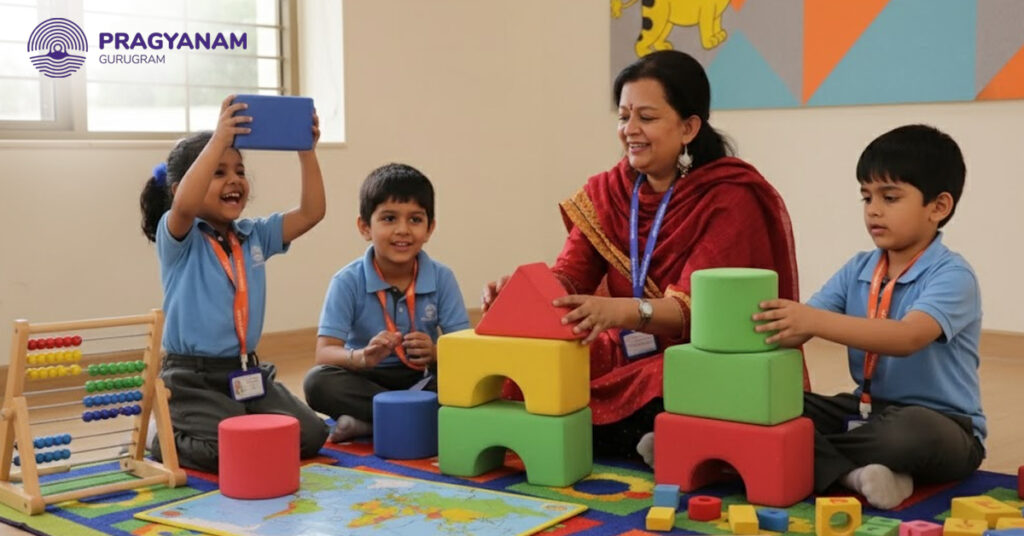
Using blocks, clay, or recycled materials to build structures teaches planning, measurement, and teamwork. These activities develop early engineering and math skills in a fun, hands-on way.
c. Nature Exploration
Outdoor play collecting leaves, identifying insects, or observing clouds helps children connect with nature. It strengthens observation skills and curiosity about the environment.
d. Art and Craft Activities
Art encourages self-expression. When children paint, draw, or create models, they learn patience, fine motor control, and how to translate imagination into form.
e. Music and Movement
Singing and dancing not only boost happiness but also enhance rhythm, coordination, and memory. They help children express themselves physically and emotionally.
f. Sensory Play
Activities like playing with sand, water, or textured materials engage the senses and improve concentration. They help children understand cause and effect while building fine motor skills.
4. The Role of Teachers in Play-Based Learning
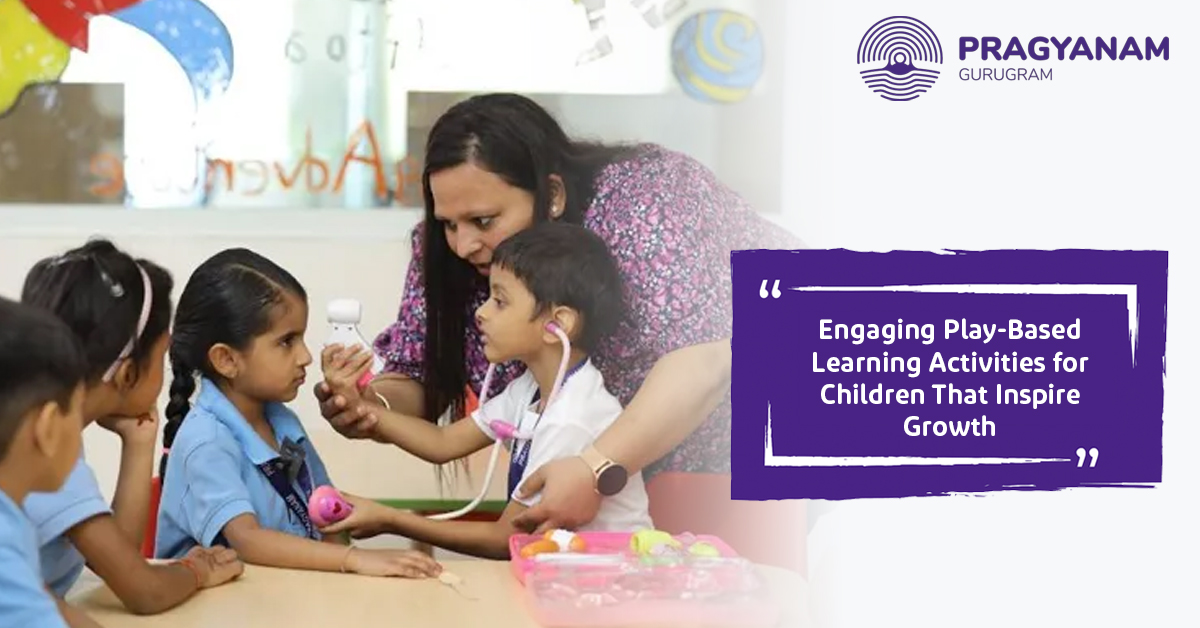
Teachers act as guides, not just instructors. They observe children’s interests, introduce new challenges, and encourage curiosity. By asking open-ended questions like “What do you think will happen if?” teachers help children think deeply and creatively.
At Pragyanam School, teachers integrate play-based learning into daily lessons, ensuring that each activity supports emotional and intellectual development.
5. How Parents Can Support Play at Home
Parents play a vital role in reinforcing playful learning. You can:
- Encourage free play let children explore without rigid instructions.
- Limit screen time to make space for creative activities.
- Play together board games, storytelling, or simple art can strengthen bonds while teaching cooperation.
- Celebrate curiosity instead of perfection.
When home and school both value play, children grow into confident, capable learners.
6. Building Future-Ready Learners
Play-based learning doesn’t just prepare children for school it prepares them for life. Through playful discovery, children learn adaptability, communication, and resilience skills they’ll carry into adulthood.
At Pragyanam School, we believe that when learning is joyful, curiosity becomes a lifelong habit. By inspiring children through play, we’re nurturing thinkers, creators, and leaders for tomorrow.
Final Thought
Play is not separate from learning it is learning. Every block stacked, every story told, and every game played contributes to a child’s overall development. By encouraging play-based learning, we help children grow not just academically but as happy, confident individuals ready to explore the world.